
When trying to determine the proper relationship between science and religion it’s important to acknowledge how challenging (maybe impossible) it is to nail down one single rule or fact that is all-encompassing of their relationship, in fact, McGrath wrote in Science and Religion a New Introduction, “No single account or “metanarrative” may be offered of [science and religions] relationship, precisely because the variety of relationships that have existed reflect prevailing social, political, economic, and cultural factors.”(p. 13) So with this in mind, we will soldier on and try to uncover the ‘proper’ relationship between science and religion. Ian Barbour one of the forefathers in regards to studying this relationship established his fourfold typology of conflict, independence, dialogue, or integration the idea being the interaction between the two can be subcategorized into one of the groups with individuals seeming to fall into and belong to one of the schools of thought. What’s going to happen for the next five hundred or so words will be an argument to which school I at least for the time being belonging.
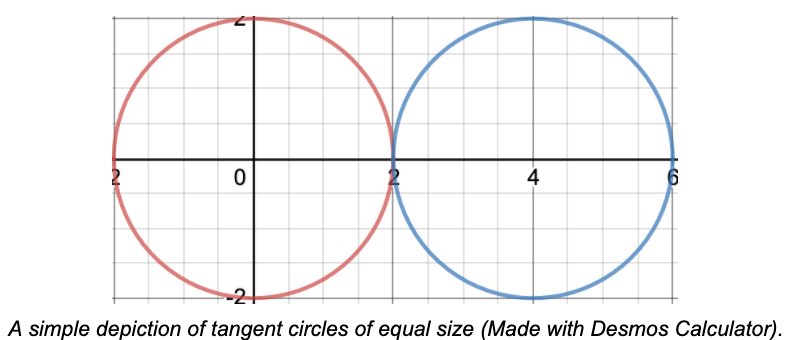
An argument could be (and has been) made for every one of the fourfold typology so there’s no ‘wrong answer’ here, just different interpretations of our own observations and collective knowledge. I find that the most realistic answer to be that science and religion act independently meaning they are completely separate entities sharing a playing field both trying to reach a goal sometimes even the same goal but independent or isolated from one another. In Stephan Jay Gould’s Nonoverlapping Majesteria he writes on the topic of conflict between science and religion, “No such conflict should exist because each subject has a … domain of teaching authority … this resolution might remain all neat and clean if the nonoverlapping magisteria of science and religion were separated by an extensive no man’s land. But, in fact, the two magisteria bump right up against each other, interdigitating in wondrously complex ways along their joint border. Many of our deepest questions call upon aspects of both for different parts of a full answer—and the sorting of legitimate domains can become quite complex and difficult.” Gould is quite straightforward here and I feel no deeper analysis is needed he described how each has authority in their respective worlds and have no business thrusting their views upon the other, as he’s describing this incredibly thin margin between the two think ven diagram but instead of the overlapping section being quite sizeable the two circles are simply tangent to one another (see image below). To give further credibility to the independent school of thought Jack Horner a well-known paleontologist responded to a 2009 wired interviewer about a theoretical discovery ‘proving creationists dead-wrong’, he retorted saying, “Religion is about faith, not evidence. Comparing science and religion isn’t like comparing apples and oranges—it’s more like apples and sewing machines.”
I’ll leave you with this: I stated that realistically science and religion are acting independently, idealistically they would act in some kind of cooperative manner. The reason why this is only idealistic is that the way they operate is entirely different. Science and religion could approach an issue and find the same result – perhaps religion with some analysis of sacred texts and science with some kind of experimentation – but the methods would not cooperate and act in an additive manner. This is why, at least for now, science and religion act independently.
 trevorf.music.blog